

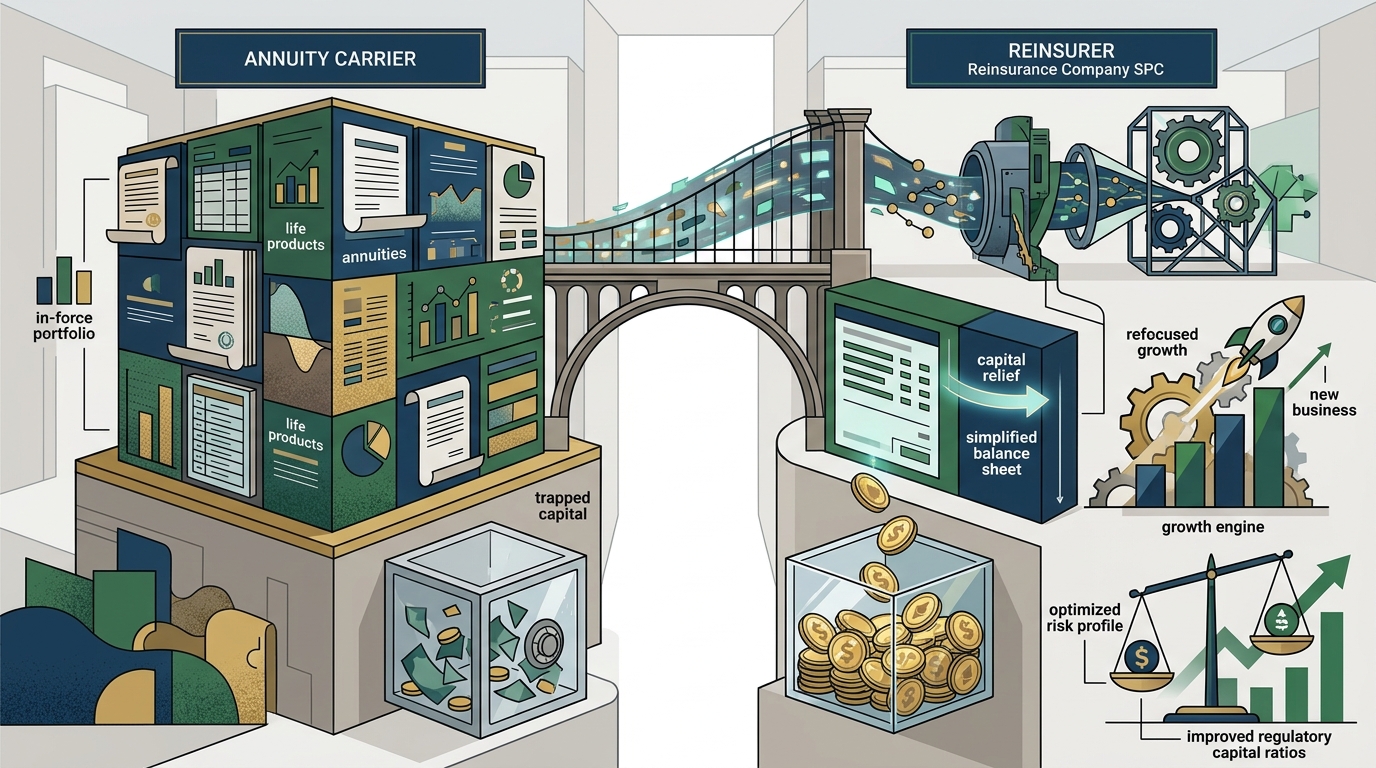
Block reinsurance is a strategic transaction that transfers an existing portfolio of in-force liabilities to a reinsurer in exchange for capital relief. For annuity carriers, this approach unlocks trapped capital, simplifies balance sheets, and allows management to refocus on new business growth. By offloading legacy liabilities, insurers can optimize their risk profile and improve regulatory capital ratios without disrupting ongoing policyholder relationships. This guide explores the core strategies, structural options, and key considerations for carriers evaluating block reinsurance in the current market environment. according to Life and Annuity
Capital Efficiency and Balance Sheet Optimization
The primary driver for block reinsurance is the immediate release of regulatory capital. When a carrier sells a block of in-force business, the associated reserves and required capital are transferred to the reinsurer. This transaction provides immediate surplus relief, which can be used to support new business issuance or return capital to shareholders. For carriers with large legacy portfolios, this capital unlock is often the most significant financial benefit of the transaction.
Capital efficiency is not just about the amount of capital released, but also about the quality of that capital. By transferring long-duration liabilities, carriers can reduce their risk-based capital (RBC) charges and improve their solvency ratios. This improved capital position provides greater flexibility in navigating market volatility and regulatory changes. Carriers should evaluate the net present value of the capital released against the cost of the reinsurance transaction to determine the true economic benefit.
At American Reinsurance, we focus on structuring transactions that maximize capital efficiency while maintaining transparency. Our approach ensures that the capital released is sustainable and aligned with the carrier's long-term strategic goals. We work closely with carriers to model the impact of the transaction on their balance sheet and regulatory standing.
Strategic Motives Beyond Capital Relief
While capital relief is a major factor, block reinsurance also serves broader strategic objectives. Carriers may use block transactions to simplify their business mix, exit unprofitable lines, or prepare for mergers and acquisitions. By offloading legacy liabilities, carriers can streamline their operations and reduce the complexity of their risk management processes. This simplification can lead to lower operational costs and improved focus on core competencies.
Another strategic motive is the management of interest rate risk. Annuity liabilities are highly sensitive to interest rate movements, and holding large blocks of fixed-rate products can expose carriers to significant economic risk. By transferring these liabilities, carriers can reduce their duration mismatch and improve their asset-liability management (ALM) profile. This risk transfer can be particularly valuable in a volatile interest rate environment.
Carriers should also consider the impact of block reinsurance on their brand and market positioning. A successful transaction can signal financial strength and strategic clarity to investors and rating agencies. It demonstrates the carrier's ability to manage its risk portfolio effectively and make disciplined capital decisions. This positive signal can enhance the carrier's reputation and support its long-term growth objectives.
Structural Options and Transaction Design
Block reinsurance transactions can take several structural forms, each with different implications for the carrier and the reinsurer. The most common structure is a full acquisition, where the reinsurer purchases 100% of the block of business. This structure provides the greatest capital relief and risk transfer but may require a higher premium or purchase price. Carriers must weigh the benefits of full risk transfer against the cost of the transaction.
Another option is a partial acquisition, where the reinsurer purchases a percentage of the block. This structure allows the carrier to retain some of the business while still achieving significant capital relief. Partial acquisitions can be useful when the carrier wants to maintain a presence in a particular market or product line. The choice between full and partial acquisition depends on the carrier's strategic goals and the specific characteristics of the block.
Runoff structures are also common in block reinsurance, particularly for legacy portfolios that are no longer actively marketed. In a runoff transaction, the reinsurer assumes the liabilities and manages them until they are fully extinguished. This structure can be attractive for carriers that want to exit a line of business entirely. The key consideration in runoff transactions is the reinsurer's ability to manage the runoff process efficiently and cost-effectively.
At American Reinsurance, we offer flexible structuring options that can be tailored to the carrier's specific needs. Our team has extensive experience in designing complex block transactions that balance capital efficiency, risk transfer, and strategic alignment. We work with carriers to identify the optimal structure for their portfolio and objectives.
Regulatory and Accounting Considerations
Block reinsurance transactions are subject to strict regulatory oversight, and carriers must ensure that their transactions comply with all applicable laws and regulations. This includes obtaining the necessary approvals from regulatory authorities and ensuring that the transaction is conducted at arm's length. Carriers should work closely with their legal and compliance teams to navigate the regulatory process and avoid any potential issues.
Accounting treatment is another critical consideration. The accounting for block reinsurance transactions can be complex, and carriers must ensure that they are applying the correct accounting standards. This includes determining whether the transaction qualifies for derecognition of the liabilities and how to recognize any gains or losses. Carriers should consult with their auditors and accounting advisors to ensure that their transactions are treated correctly under applicable accounting standards.
Tax implications are also important, as block reinsurance transactions can have significant tax consequences for both the carrier and the reinsurer. Carriers should work with their tax advisors to structure the transaction in a tax-efficient manner. This may involve considering the timing of the transaction, the form of the consideration, and the jurisdiction in which the transaction is conducted. Proper tax planning can help maximize the economic benefit of the transaction.
Regulatory expertise is a core strength of American Reinsurance. Our team is familiar with the regulatory regimes in key global markets, including NAIC, Solvency II, and APAC frameworks. We help carriers navigate the regulatory and accounting complexities of block reinsurance transactions, ensuring that they are structured in a compliant and efficient manner.
Selecting the Right Reinsurance Partner
Choosing the right reinsurance partner is critical to the success of a block reinsurance transaction. Carriers should evaluate potential partners based on their financial strength, underwriting expertise, and track record in managing similar portfolios. A strong partner will have the capital resources to support the transaction and the operational capability to manage the transferred liabilities effectively. Carriers should also consider the partner's alignment with their strategic goals and their commitment to a long-term partnership.
At American Reinsurance, we prioritize transparency and collaboration in all our dealings. We believe that a successful reinsurance partnership is built on trust, mutual respect, and a shared commitment to achieving the best possible outcome for the carrier. We are committed to providing our clients with the expertise, resources, and support they need to execute a successful block reinsurance transaction.
Key Takeaways
- Block reinsurance provides immediate capital relief by transferring in-force liabilities to a reinsurer.
- Strategic motives for block reinsurance include balance sheet simplification, risk management, and M&A preparation.
- Structural options include full acquisition, partial acquisition, and runoff structures, each with different implications.
- Regulatory and accounting considerations are critical and require careful planning and compliance.
- Selecting the right reinsurance partner is essential for the success of the transaction.
- Transparency and collaboration are key to building a strong reinsurance partnership.
- Carriers should evaluate the net present value of the capital released against the cost of the transaction.
Frequently Asked Questions
What is block reinsurance?
Block reinsurance is a transaction where a reinsurer purchases an existing portfolio of in-force insurance policies from a carrier, transferring the associated liabilities and capital requirements.
How does block reinsurance differ from flow reinsurance?
Block reinsurance involves the transfer of existing in-force policies, while flow reinsurance involves the transfer of new business as it is written. Block reinsurance provides immediate capital relief, while flow reinsurance supports ongoing growth.
What are the main benefits of block reinsurance for annuity carriers?
The main benefits include capital relief, balance sheet simplification, risk transfer, and the ability to refocus on new business growth.
How long does a block reinsurance transaction typically take?
The duration of a block reinsurance transaction can vary depending on the complexity of the portfolio and the regulatory approvals required. It can take several months to over a year to complete.
What factors should carriers consider when selecting a reinsurance partner?
Carriers should consider the partner's financial strength, underwriting expertise, track record, transparency, and alignment with their strategic goals.
Can block reinsurance be used to exit a line of business?
Yes, block reinsurance can be used to exit a line of business entirely, particularly through runoff structures where the reinsurer manages the liabilities until they are extinguished.
Conclusion
Block reinsurance is a powerful tool for annuity carriers seeking to optimize their capital position and strategic focus. By carefully evaluating the structural options, regulatory considerations, and partner selection criteria, carriers can execute transactions that deliver significant value. At American Reinsurance, we are committed to helping carriers navigate the complexities of block reinsurance and achieve their strategic goals. To discuss your specific needs, please contact our team.