

Step-by-Step Process for Selecting Annuity Liability Capital Relief Reinsurance
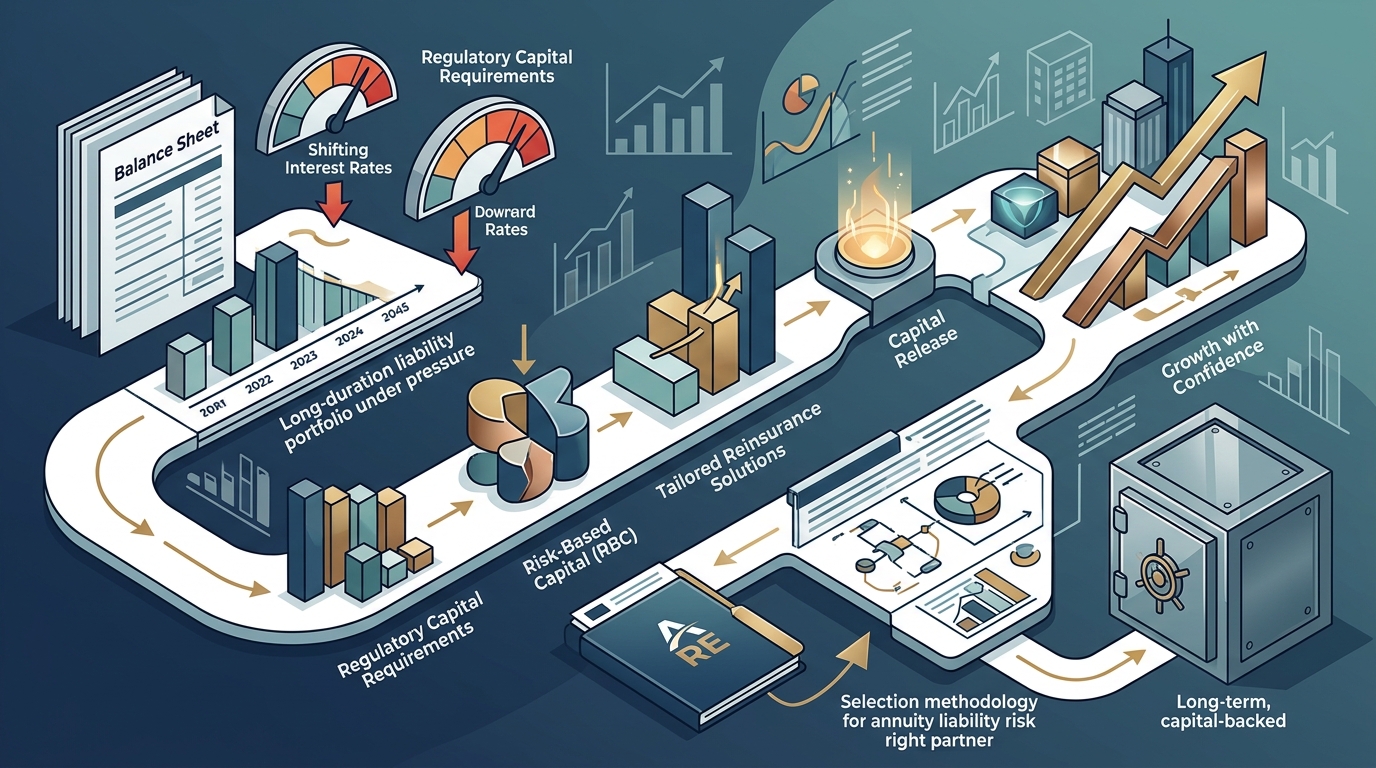
Insurance carriers managing long-duration annuity portfolios face significant balance sheet pressure from shifting interest rate environments and regulatory capital requirements. According to recent industry analyses, over 60% of mid-sized life insurers have utilized reinsurance solutions to optimize their risk-based capital (RBC) ratios in the last five years. This strategic move allows companies to free up capital for growth while maintaining robust solvency standards. The following guide outlines the precise methodology for selecting the right annuity liability capital relief reinsurance partner. (The Fed Accounting) (Contact Us)
Understanding the Need for Capital Relief
Annuity liability capital relief reinsurance is a transaction where an insurer transfers a portion of its annuity liabilities to a reinsurer. In exchange, the primary insurer receives a reduction in its required capital reserves. This mechanism is critical for companies looking to improve their financial ratios without liquidating assets or issuing new equity.
Liability valuation is the process of determining the present value of future insurance obligations. For annuities, this involves complex actuarial assumptions regarding mortality, lapse rates, and interest rates. When these assumptions change, the capital required to support the liabilities can fluctuate dramatically. Capital relief provides a stable platform for managing these fluctuations. (About)
Many insurers turn to specialized providers to manage this complexity. For more information on how reinsurance impacts balance sheets, you can explore our liability relief services. This approach allows carriers to focus on core business operations while experts manage the intricate details of capital optimization.
Evaluating Reinsurer Strength and Ratings
The first step in selecting a partner is assessing their financial strength. Reinsurers must maintain high credit ratings to ensure they can meet long-term obligations. The Standard & Poor's Global Ratings agency provides independent assessments of financial stability. According to S&P, a rating of A- or higher indicates a strong ability to meet ongoing obligations. (The Fed Accounting)
Moody's Investors Service is another key authority in evaluating financial institutions. Their ratings reflect the likelihood of timely payment of financial commitments. When reviewing potential partners, look for consistent performance across economic cycles. A reinsurer with a history of stability is less likely to face solvency issues during market downturns.
Additionally, consider the reinsurer's expertise in annuity products. Not all reinsurance companies specialize in long-duration liabilities. Specialized knowledge ensures accurate pricing and efficient claims handling. You can learn more about our specific annuity solutions by visiting our annuity solutions page. This specialization is a key differentiator in the market.
Structuring the Transaction
Once a potential partner is identified, the next step is structuring the deal. This involves defining the scope of the liabilities to be transferred. Common structures include quota share, surplus share, or facultative reinsurance. Each structure has different implications for capital relief and risk retention.
Quota share reinsurance is a proportional arrangement where the reinsurer accepts a fixed percentage of every policy. This structure provides immediate and predictable capital relief. It is often used for portfolios with homogeneous risk characteristics. Surplus share, on the other hand, allows for variable retention based on the size of the risk.
Facultative reinsurance is used for individual large risks that do not fit into standard treaty structures. It offers flexibility but requires more administrative effort. The choice of structure depends on the insurer's risk appetite and capital goals. For detailed comparisons of these structures, refer to our resource library on reinsurance structures.
The Due Diligence Process
Due diligence is the most critical phase of the selection process. It involves a thorough review of the reinsurer's underwriting guidelines, claims history, and operational capabilities. Insurers must verify that the reinsurer's actuarial models align with their own. Discrepancies in valuation methods can lead to unexpected capital charges.
Legal and regulatory compliance is also a major focus. The transaction must adhere to state insurance codes and international regulations. The National Association of Insurance Commissioners (NAIC) sets standards for reinsurance recoverables. According to NAIC guidelines, proper documentation is essential for capital credit recognition.
Financial modeling is used to project the impact of the transaction on the balance sheet. This includes stress testing under various economic scenarios. The goal is to ensure that the capital relief is sustainable over the long term. For insights into our underwriting standards, see our underwriting philosophy.
Implementation and Ongoing Monitoring
After the deal is structured and due diligence is complete, implementation begins. This involves the transfer of data, policy administration, and initial premium payments. Clear communication channels must be established between the ceding company and the reinsurer.
Ongoing monitoring is essential to ensure the transaction continues to meet its objectives. Regular reviews of the reinsurer's financial health are necessary. Any changes in the reinsurer's rating should trigger a reassessment of the relationship. The International Association of Insurance Supervisors (IAIS) provides global standards for monitoring reinsurance risk.
Reporting requirements must be clearly defined in the contract. Timely and accurate reporting ensures transparency and trust. For more on our reporting capabilities, check our reporting services. This transparency is vital for maintaining regulatory compliance.
Key Takeaways
- Capital relief reinsurance reduces the required risk-based capital for annuity liabilities.
- Reinsurer financial strength ratings, such as those from S&P and Moody's, are critical indicators of reliability.
- Quota share and surplus share are common structures for proportional capital relief.
- Due diligence must include actuarial alignment and regulatory compliance checks.
- NAIC standards govern the recognition of reinsurance recoverables in financial statements.
- Ongoing monitoring of the reinsurer's financial health is necessary for long-term stability.
- Clear communication and reporting protocols are essential for successful implementation.
Frequently Asked Questions
What is annuity liability capital relief?
Annuity liability capital relief is a financial strategy where an insurer transfers annuity liabilities to a reinsurer to reduce its required capital reserves and improve its risk-based capital ratio.
Why are reinsurer ratings important?
Reinsurer ratings are important because they indicate the financial strength and ability of the reinsurer to pay future claims. High ratings reduce counterparty risk for the ceding insurer.
What is the difference between quota share and surplus share?
Quota share is a proportional reinsurance where a fixed percentage of each policy is transferred. Surplus share allows the ceding insurer to retain a certain amount of risk per policy, with the reinsurer covering the excess.
How does reinsurance impact risk-based capital?
Reinsurance reduces the amount of capital an insurer must hold against its liabilities. This frees up capital for other business activities, such as new business growth or investment.
What is the role of actuarial alignment?
Actuarial alignment ensures that the ceding company and the reinsurer use consistent assumptions for valuing liabilities. Misalignment can lead to capital volatility and disputes.
How often should reinsurer financial health be reviewed?
Financial health should be reviewed regularly, typically quarterly or annually, depending on the contract terms and regulatory requirements. Immediate review is needed if a rating change occurs.
What are the regulatory requirements for reinsurance?
Regulatory requirements vary by jurisdiction but generally include standards for credit for reinsurance, reporting, and collateral. The NAIC provides guidelines for US insurers.
Optimize Your Balance Sheet Today
Selecting the right annuity liability capital relief reinsurance partner is a complex but rewarding process. It requires careful evaluation of financial strength, structural options, and operational capabilities. By following these steps, insurers can achieve sustainable capital relief and enhance their competitive position.
At American Re, we specialize in providing tailored reinsurance solutions for annuity portfolios. Our team of experts is ready to help you navigate the complexities of capital relief. Contact us today to schedule a consultation and learn how we can support your financial goals. Visit our contact page to get started.