

Evaluating Capital-Backed Lending: Risks, Rewards, and Alternatives
Capital-backed lending has emerged as a critical liquidity engine for small businesses seeking rapid growth without traditional bank hurdles. According to recent industry data from the Federal Reserve, small business credit access has shifted significantly toward alternative funding sources, with over 40% of new business loans now originating from non-bank entities. This shift reflects a broader economic reality where speed and flexibility often outweigh the lower interest rates of conventional banking. For business owners, understanding the mechanics of capital-backed loans is not just a financial exercise but a strategic imperative for survival and expansion in a volatile market. (Contact Us)
What Is Capital-Backed Lending?
Capital-backed lending is a financing model where a lender provides funds to a business, secured by the company's assets or future revenue streams. Unlike unsecured personal loans, these instruments are backed by tangible or intangible collateral, reducing the lender's risk and often allowing for larger loan amounts. The term "capital-backed" broadly encompasses asset-based lending, revenue-based financing, and merchant cash advances, each with distinct repayment structures.
Asset-based lending is a specific type of capital-backed loan where the collateral consists of physical assets such as inventory, accounts receivable, or equipment. This model is particularly common in manufacturing and distribution sectors where inventory turnover is high. Revenue-based financing, on the other hand, uses future sales as the primary security, making it ideal for service-based businesses with predictable cash flow but limited physical assets.
Understanding the distinction between these models is crucial for business owners. A manufacturing firm might leverage its inventory for a lower-cost asset-based loan, while a software company might opt for revenue-based financing to avoid diluting equity or losing control of its intellectual property. The choice depends heavily on the nature of the business's assets and its cash flow patterns.
How Capital-Backed Loans Function
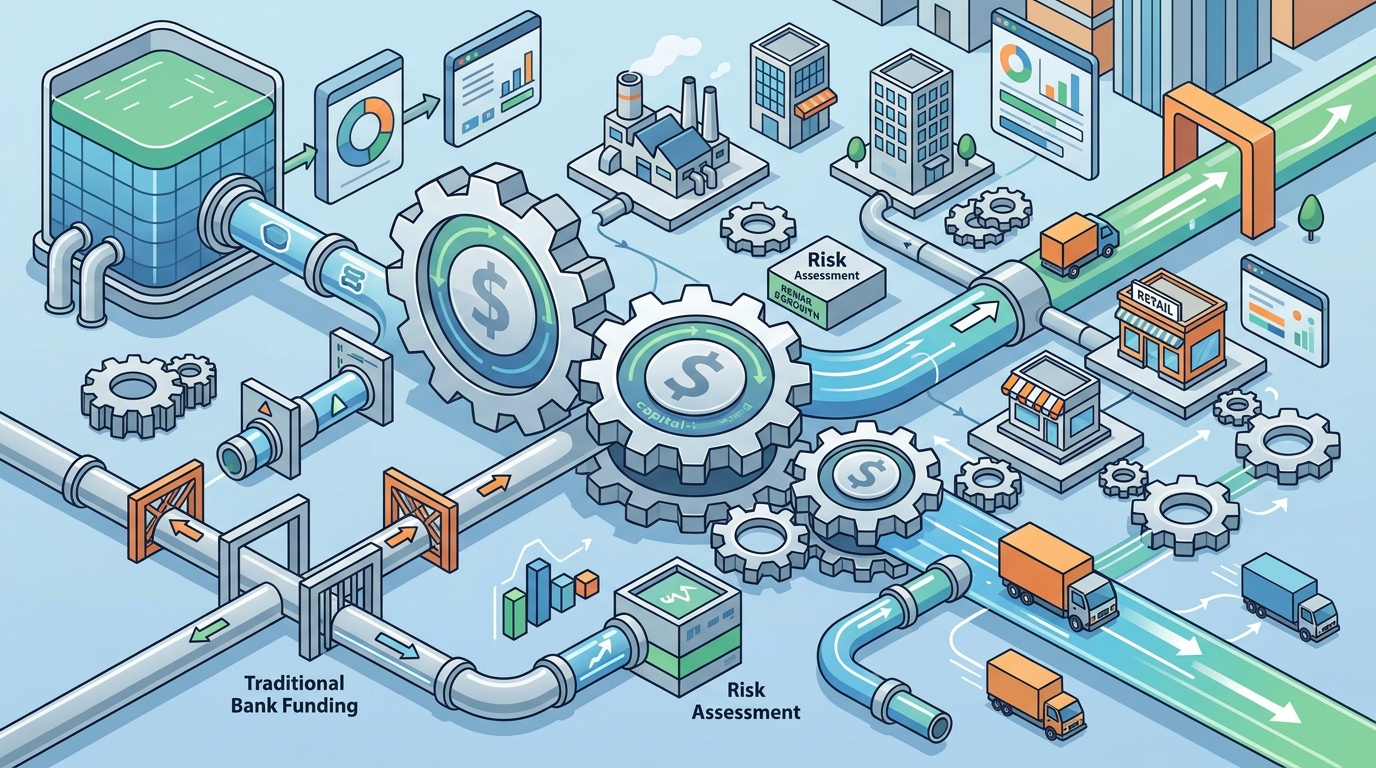
The mechanism of capital-backed lending differs significantly from traditional banking. Traditional banks rely heavily on credit scores and historical financial statements, often requiring months of underwriting. Capital-backed lenders, however, focus on real-time data and asset valuation. This allows for faster funding, often within 24 to 48 hours, which is critical for businesses facing urgent cash flow gaps.
The underwriting process typically involves a thorough analysis of the business's collateral. For asset-based loans, lenders may conduct physical inspections of inventory or verify the value of equipment. For revenue-based loans, they analyze bank statements and payment processor data to determine a fixed percentage of daily or weekly sales that will be withheld until the loan is repaid. This daily or weekly withholding structure ensures that repayment aligns with the business's ability to pay, reducing the risk of default during slow periods.
Interest rates and fees in capital-backed lending are generally higher than traditional bank loans. This premium compensates the lender for the speed of funding and the higher risk profile of the borrower. However, the cost of capital is often justified by the opportunity cost of delayed funding. For a business that can use immediate capital to secure a large contract or purchase inventory at a discount, the higher interest rate may result in a net positive return on investment.
Pros and Cons of Capital-Backed Financing
Capital-backed financing offers distinct advantages and disadvantages that business owners must weigh carefully. The primary benefit is speed. In a competitive market, the ability to secure funding in days rather than months can be the difference between capturing a market opportunity and losing it to a competitor. Additionally, capital-backed loans are often more accessible to businesses with lower credit scores or shorter operating histories, as the collateral provides the primary security for the lender.
However, the costs associated with capital-backed lending can be substantial. The effective annual percentage rate (APR) can exceed 20% or more, depending on the loan structure and term. For businesses with thin profit margins, these costs can erode profitability significantly. Furthermore, the daily or weekly repayment structure can strain cash flow, particularly for seasonal businesses or those with irregular income streams.
Another critical consideration is the risk of losing collateral. In the event of default, the lender has the right to seize the pledged assets. For a small business, losing key equipment or inventory can be catastrophic, potentially leading to business closure. Therefore, it is essential to have a clear repayment plan and sufficient cash flow projections before committing to a capital-backed loan.
Evaluating Lending Providers
Not all capital-backed lenders are created equal. The landscape includes traditional banks, online lenders, and specialized alternative financing companies. Each type offers different terms, speeds, and eligibility requirements. When evaluating providers, business owners should look beyond the advertised interest rate and consider the total cost of capital, including origination fees, processing fees, and prepayment penalties.
Transparency is key. Reputable lenders will provide a clear breakdown of all costs and terms before the loan is funded. They should also offer flexible repayment options that align with the business's cash flow. For example, a revenue-based lender might allow for temporary payment reductions during slow seasons, providing a safety net for the borrower.
It is also important to assess the lender's reputation and customer service. A lender that is responsive and supportive during the repayment process can be a valuable partner, especially if the business faces temporary financial difficulties. Conversely, a lender with poor customer service can add significant stress to an already challenging situation.
Strategic Alternatives to Capital-Backed Loans
While capital-backed loans are a powerful tool, they are not the only option for business financing. Business owners should explore alternative funding sources to ensure they are getting the best possible terms. Equity financing, for instance, involves selling a portion of the business to investors in exchange for capital. This option does not require repayment or collateral, but it dilutes ownership and control.
Another alternative is crowdfunding, which allows businesses to raise small amounts of money from a large number of people, typically via the internet. This method can also serve as a marketing tool, helping to build a customer base and brand awareness. However, crowdfunding campaigns require significant effort and marketing to succeed.
Traditional bank loans remain a viable option for businesses with strong credit histories and solid financial statements. While the approval process is longer, the interest rates are typically lower, and the terms are more favorable. For businesses that can plan ahead and meet the stringent requirements, a bank loan can be the most cost-effective solution.
Comparison of Funding Options
| Funding Type | Speed of Funding | Typical APR | Collateral Required | Best For |
|---|---|---|---|---|
| Capital-Backed Loan | 1-3 Days | 10% - 40% | Yes | Urgent cash flow needs |
| Traditional Bank Loan | 2-6 Weeks | 5% - 15% | Optional | Long-term growth |
| Equity Financing | 1-3 Months | N/A (Dilution) | No | High-growth startups |
| Crowdfunding | 1-2 Months | N/A (Platform Fees) | No | Product launches |
Key Takeaways
- Capital-backed lending provides rapid access to capital, often within 24 to 48 hours, making it ideal for urgent business needs.
- The cost of capital is higher than traditional bank loans, with APRs often exceeding 10% and sometimes reaching 40% or more.
- Collateral is a key component, meaning failure to repay can result in the loss of business assets.
- Revenue-based financing aligns repayments with cash flow, reducing the risk of default during slow periods.
- Business owners should evaluate multiple lenders to ensure transparency and favorable terms.
- Alternatives such as equity financing and crowdfunding offer different risk and reward profiles.
- Traditional bank loans remain the most cost-effective option for businesses with strong credit and long-term planning horizons.
Frequently Asked Questions
What is the minimum credit score required for capital-backed lending?
Capital-backed lending is less dependent on credit scores than traditional banking. While a score above 600 is often preferred, many lenders focus primarily on the value of the collateral and the business's cash flow history.
How quickly can I get funds from a capital-backed loan?
Funding can be as fast as 24 hours, depending on the lender and the completeness of the application. Online lenders typically offer the fastest turnaround times.
Can I prepay a capital-backed loan without penalties?
Many capital-backed loans allow for prepayment, but it is essential to review the terms. Some lenders may charge a prepayment fee or structure the repayment in a way that makes early payoff less beneficial.
What happens if I default on a capital-backed loan?
In the event of default, the lender has the right to seize the pledged collateral. This could include inventory, equipment, or accounts receivable, potentially leading to business closure.
Is capital-backed lending suitable for all businesses?
No. It is best suited for businesses with consistent cash flow or valuable assets. Businesses with irregular income or limited assets may find other funding sources more appropriate.
How does revenue-based financing differ from asset-based lending?
Revenue-based financing uses future sales as collateral, with repayments tied to a percentage of daily sales. Asset-based lending uses physical assets like inventory or equipment as collateral, with repayments typically made in fixed installments.
What documents are needed to apply for a capital-backed loan?
Typical documents include bank statements, tax returns, financial statements, and a detailed business plan. For asset-based loans, documentation of the collateral's value is also required.
Next Steps for Your Business
Evaluating capital-backed lending is a complex process that requires careful consideration of your business's unique needs and financial health. At American Re, we specialize in providing tailored financial solutions that align with your growth objectives. Our team of experts can help you navigate the complexities of capital-backed lending and identify the best funding strategy for your business. Visit our services page to learn more about our offerings and contact us today to schedule a consultation. We are committed to helping you make informed financial decisions that drive long-term success.