

Flow vs Block Reinsurance: Strategic Capital Solutions for Insurers
Reinsurance structures have evolved from simple risk transfer mechanisms into sophisticated capital management tools. According to recent industry analyses, the global reinsurance market is projected to exceed $1 trillion in premium volume by 2026, driven by insurers seeking to optimize balance sheets rather than merely mitigate risk. This shift has created a critical divergence in how carriers approach capital efficiency. Insurers must now choose between dynamic, ongoing capacity and targeted, one-time relief. Understanding the structural differences between flow and block reinsurance is no longer optional for chief financial officers and actuaries. It is a fundamental requirement for sustaining growth in asset-intensive markets. (About us 8211 American)
Understanding Flow Reinsurance
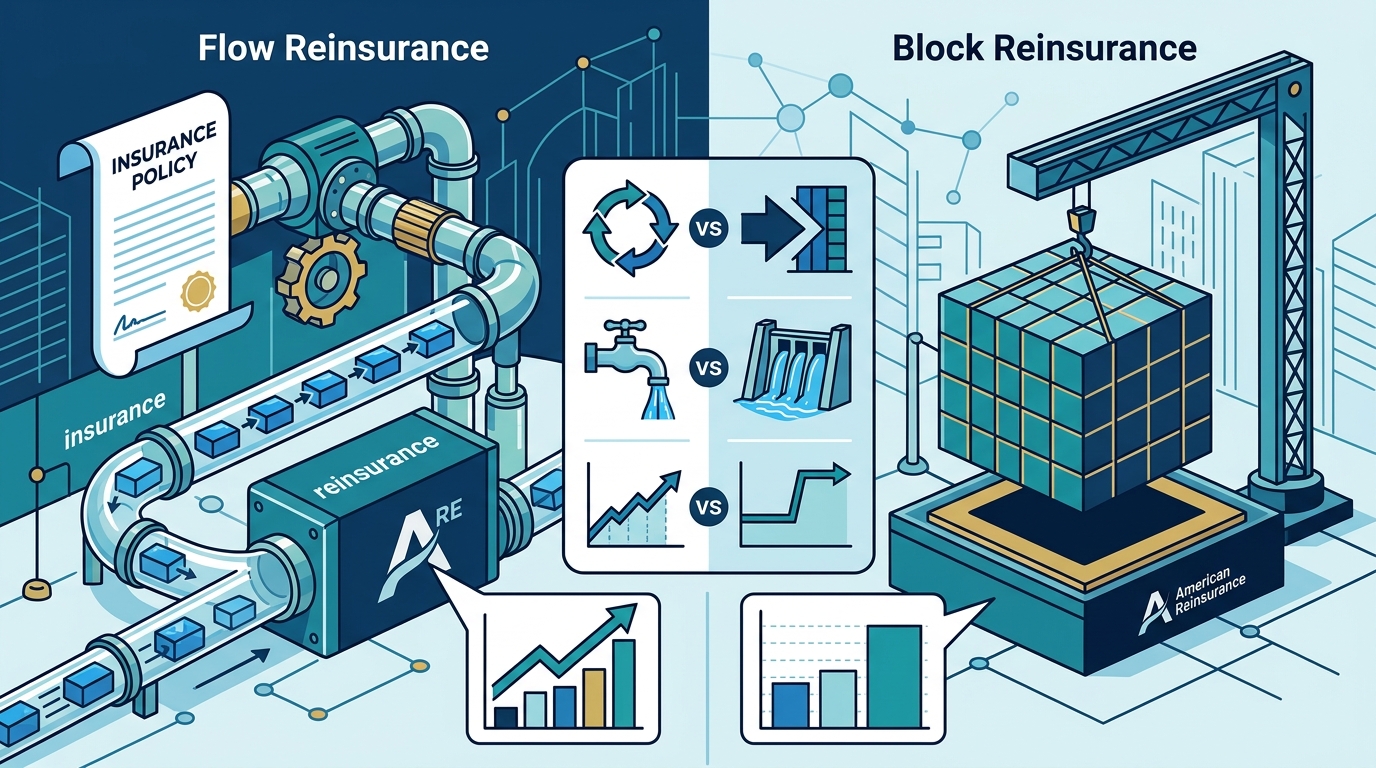
Flow reinsurance operates as a continuous, automatic mechanism for transferring risk. It is designed for insurers who need consistent capacity to support new business production. This structure allows carriers to write new policies without constantly renegotiating terms for each individual contract. The primary benefit is scalability. As the insurer grows, the reinsurance capacity grows with it, providing a stable foundation for expansion. (Terms of services 8211)
This approach is particularly effective for asset-intensive lines such as fixed and indexed annuities. These products require long-term capital support because the liabilities extend over decades. Flow reinsurance provides the necessary surplus relief, allowing insurers to maintain strong ratings while increasing their book of business. The automatic nature of the treaty ensures that new policies are covered immediately, reducing administrative friction and accelerating time-to-market.
For carriers focused on long-term capital efficiency, flow reinsurance offers a predictable cost structure. Premiums are calculated based on the volume of new business, aligning costs directly with revenue generation. This alignment supports disciplined underwriting and encourages sustainable growth. Insurers can focus on product innovation and customer acquisition, knowing that their capital base is protected by a reliable reinsurance partner. (American Reinsurance)
Analyzing Block Reinsurance
Block reinsurance, in contrast, is a targeted transaction that transfers a specific portfolio of existing liabilities. It is typically used for strategic capital relief rather than ongoing growth. This structure allows insurers to unlock trapped capital from legacy books, such as closed blocks or runoff portfolios. The transaction is discrete, with defined terms and conditions that apply only to the specified block of business.
Block reinsurance is often driven by corporate restructuring, mergers and acquisitions, or a desire to simplify the balance sheet. By transferring specific liabilities, insurers can reduce complexity and focus on core competencies. This approach is particularly valuable for companies undergoing significant strategic shifts. It provides immediate capital relief, which can be redeployed into higher-yield opportunities or used to strengthen the overall financial position.
The customization of block reinsurance is a key advantage. Each transaction is tailored to the specific characteristics of the portfolio, including asset allocation, tax implications, and accounting standards. This flexibility allows insurers to optimize their capital structure in ways that standard treaties cannot. However, the process is more complex and time-consuming than flow reinsurance, requiring detailed due diligence and negotiation.
Key Structural Differences
While both flow and block reinsurance serve to manage risk and optimize capital, their operational mechanics differ significantly. The choice between them depends on the insurer's immediate goals and long-term strategy. The following table summarizes the core distinctions.
| Feature | Flow Reinsurance | Block Reinsurance |
|---|---|---|
| Purpose | Support new business growth | Relieve legacy liabilities |
| Duration | Ongoing, automatic | Discrete, one-time |
| Capital Impact | Surplus relief for new volume | Immediate capital unlocking |
| Complexity | Lower, standardized structure | Higher, bespoke negotiation |
| Best For | Asset-intensive growth | Corporate restructuring |
Flow reinsurance is ideal for insurers who prioritize consistent capacity and operational efficiency. It allows for seamless integration with new product launches and reduces the administrative burden of treaty management. Block reinsurance is better suited for companies seeking to optimize their balance sheet through targeted capital relief. It provides a strategic exit from complex legacy books, allowing for a cleaner, more focused financial profile.
Strategic Implications for Growth
The decision to adopt flow or block reinsurance has profound implications for an insurer's strategic trajectory. Flow reinsurance supports a growth-oriented strategy. It enables carriers to expand their market share without proportionally increasing their capital requirements. This leverage is critical in competitive markets where speed and scale determine success. By maintaining a stable capital base, insurers can invest in technology, distribution, and customer experience.
Block reinsurance supports a transformation-oriented strategy. It allows companies to shed non-core liabilities and refocus on their primary business objectives. This is particularly relevant in an era of increasing regulatory scrutiny and capital requirements. By simplifying their balance sheet, insurers can improve their risk profile and enhance their credit ratings. This strategic clarity can attract investors and partners who value financial discipline and operational efficiency.
Both approaches require a deep understanding of capital markets and regulatory frameworks. Insurers must align their reinsurance strategy with their overall corporate goals. This alignment ensures that capital is deployed effectively and that risk is managed appropriately. A strategic partner can provide the expertise needed to navigate these complexities, ensuring that the chosen structure delivers long-term value.
Regulatory and Compliance Factors
Regulatory compliance is a critical consideration in reinsurance structuring. Both flow and block reinsurance must adhere to strict guidelines in key global markets, including NAIC, Solvency II, and APAC frameworks. These regulations dictate capital requirements, reporting standards, and risk management practices. Insurers must ensure that their reinsurance programs are designed to meet these requirements while maximizing capital efficiency.
American Reinsurance brings deep regulatory expertise to every transaction. Our team is familiar with the nuances of different regulatory regimes, allowing us to design structures that are both compliant and effective. We work closely with clients to navigate the complexities of cross-border reinsurance, ensuring that their capital is protected and their operations remain seamless. This regulatory clarity is essential for maintaining trust and stability in the market.
Furthermore, the transparency of reinsurance structures is paramount. Insurers must have full visibility into their risk exposure and capital usage. American Reinsurance provides clear, detailed reporting that supports informed decision-making. This transparency builds trust and strengthens the partnership between insurer and reinsurer. It also facilitates better risk management and capital allocation, leading to improved financial performance.
Key Takeaways
- Flow Reinsurance provides ongoing capacity for new business, supporting scalable growth in asset-intensive lines.
- Block Reinsurance offers targeted capital relief for legacy liabilities, enabling strategic balance sheet optimization.
- Capital Efficiency is the primary driver for both structures, but the mechanisms differ significantly.
- Regulatory Compliance requires deep expertise in NAIC, Solvency II, and APAC frameworks to ensure structural integrity.
- Strategic Alignment is critical; flow supports growth, while block supports transformation.
- Transparency in reporting and pricing is essential for maintaining trust and operational clarity.
- Long-Term Partnership yields better outcomes than transactional relationships, as seen in American Reinsurance's 20-year track record.
Frequently Asked Questions
What is the primary difference between flow and block reinsurance?
Flow reinsurance is an ongoing, automatic treaty that supports new business growth, while block reinsurance is a discrete transaction that transfers a specific portfolio of existing liabilities for capital relief.
Which reinsurance type is better for asset-intensive insurers?
Flow reinsurance is typically preferred for asset-intensive insurers because it provides consistent capacity for new products like fixed and indexed annuities, ensuring balance sheet stability during growth.
Can block reinsurance be used for mergers and acquisitions?
Yes, block reinsurance is often used in M&A scenarios to simplify the balance sheet by transferring legacy liabilities, allowing the acquiring company to focus on core operations.
How does American Reinsurance ensure regulatory compliance?
Our team integrates actuarial, regulatory, and structuring insights to design bespoke solutions that comply with NAIC, Solvency II, and APAC frameworks, ensuring global operational integrity.
What is the minimum commitment for flow reinsurance?
Flow reinsurance structures are tailored to the client's capital objectives and business model, with no one-size-fits-all minimum commitment, focusing instead on long-term capital efficiency.
Does block reinsurance affect the insurer's credit rating?
Properly structured block reinsurance can enhance credit ratings by unlocking trapped capital and reducing complexity, though the impact depends on the specific transaction terms and regulatory treatment.
How long does a block reinsurance transaction take?
Block reinsurance transactions are complex and require detailed due diligence, typically taking several months to negotiate and close, depending on the size and complexity of the portfolio.
What types of products are covered under flow reinsurance?
Flow reinsurance commonly covers fixed and indexed annuities, pension risk transfer (PRT), and other asset-intensive products that require long-term capital support.
Partner with American Reinsurance
Choosing the right reinsurance structure is a pivotal decision that impacts your insurer's long-term viability. Whether you need scalable capital for new business or strategic relief for legacy liabilities, American Reinsurance provides the expertise and capital strength to support your goals. We do not rely on templates. We build reinsurance around your objectives.
Contact our team today to discuss a capital-efficient, custom-fit solution for your business. Visit our Contact Us page to schedule a consultation with our senior management team.